By Annika, All Nordics
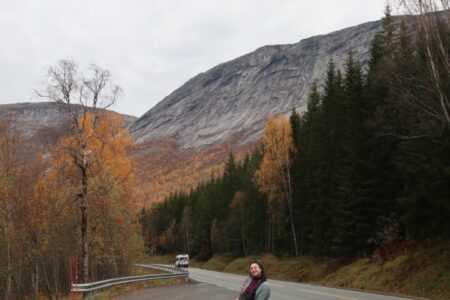
There is a particular moment at the end of summer in the Nordics when the landscape begins to change.
The long, light-filled days are still here, but there is a crispness in the air. The forests feel quieter. The colours deepen. The ground is soft underfoot, the leaves are beginning to shift, and if you know where to look, the season offers some of its most delicious rewards.
This is one of my favourite times of year in the North, because it is foraging season.
Cloudberries, blueberries and lingonberries begin to appear across the landscape, and the forests become rich with mushrooms. What might begin as a simple hike can quickly turn into a treasure hunt, with every patch of moss, every clearing and every woodland trail offering the possibility of finding something fresh, wild and completely seasonal.
A different kind of Nordic adventure
Foraging is one of those experiences that feels beautifully simple, but also deeply memorable.
There is no need for grand staging or complicated equipment. You step into the forest, slow down, look more closely and begin to understand the landscape in a different way. You notice the textures of the moss, the smell of the trees, the changing colours of the berries and the way local people move through nature with knowledge built up over generations.
At this time of year, we often include foraging in our itineraries because it is an adventure in itself. It works naturally alongside hiking, lodge stays, wilderness experiences and days spent exploring the forests and fells. It gives guests the chance to do something active, local and genuinely connected to the place they are visiting.
And, of course, you cannot eat fresher than straight from the plant.
Cloudberries, blueberries, lingonberries and Arctic raspberries
Each berry has its own character and its own place in Nordic food culture.
Cloudberries are perhaps the most prized. Golden-orange in colour and often found in wet, marshy areas, they feel like a real reward when you find them. They are delicate, slightly tart and incredibly special, often served with desserts, jams or alongside traditional dishes.
Blueberries are more familiar to many guests, but picking them in the wild is a completely different experience from buying them in a shop. In the forest, they are smaller, darker and intensely flavoured. A handful of wild blueberries picked during a hike tastes like summer concentrated into one bite.
Lingonberries arrive as the season begins to move towards autumn. Bright red, sharp and full of flavour, they are a staple across the Nordic countries and often served with savoury dishes, from game and meatballs to porridge and pancakes. Finding them in the wild gives guests a new appreciation for an ingredient they may already have seen on Nordic menus.
And then there are Arctic raspberries, or åkerbär, one of the North’s most delicate and treasured berries. Small, fragrant and beautifully aromatic, they are not always easy to find, which makes them feel even more special when they appear. For many locals, they are a true taste of northern summer, often associated with jams, desserts and traditional flavours that are hard to recreate anywhere else.
Together, these berries tell the story of the season. They are colourful, humble and deeply connected to the land.
The magic of mushroom foraging
Then there are the mushrooms.
Mushroom foraging adds a completely different kind of excitement to a walk in the woods. It encourages you to look down, slow your pace and pay attention to the forest floor. With the right guide, it becomes fascinating. Guests learn how mushrooms grow, where to look for them, which varieties are prized locally and how they are used in Nordic cooking.
It is not just about filling a basket. It is about learning to read the forest.
It is also important to say that foraging, especially for mushrooms, should always be done with someone who deeply understands the local plants and fungi. Some mushrooms and berries can be harmful, and in the case of certain mushrooms, mistakes can be extremely serious or even fatal. That is why we always recommend relying on expert local guides, never guessing, and only eating what has been confidently identified as safe.
With the right knowledge, foraging is a wonderful and rewarding experience. There is something deeply grounding about returning from a walk with ingredients that might later appear in a meal: berries folded into dessert, mushrooms served with local produce, or a simple snack enjoyed outdoors after a day in nature.
Why guests love it
Foraging appeals to so many types of travellers because it feels authentic without needing to be overdesigned.
For families, it becomes a fun and active outdoor activity, especially for children who love searching for berries. For couples, it can be a peaceful, slow-paced experience in the forest. For food lovers, it offers a direct connection between landscape and cuisine. For those looking for wellness, it is a chance to be outside, present and fully absorbed in the natural world.
It also brings a sense of achievement. Guests are not simply being shown the landscape; they are participating in it.
That is what makes foraging such a strong addition to late summer and early autumn itineraries. It turns a walk into an experience. It turns the forest into a pantry. And it helps guests understand how closely Nordic life is still connected to the seasons.
From forest to table
One of the greatest pleasures of foraging is what happens afterwards.
A handful of berries eaten on the trail can be just as memorable as a beautifully prepared meal. But when foraged ingredients are brought into the dining experience, the connection becomes even stronger. Guests begin to see how Nordic cuisine is shaped by what grows locally and seasonally.
This is especially true in the North, where the growing season is short but intense. The flavours of late summer and early autumn feel precious because they are so tied to a particular moment in the year. They cannot be rushed, imported or recreated in quite the same way.
There is a luxury in that.
Not the obvious kind of luxury, but the Nordic kind: time outside, space to breathe, fresh air, expert local knowledge and ingredients gathered by hand.
A season worth travelling for
Late summer and early autumn can sometimes be overlooked in favour of winter snow or the midnight sun, but for me, this is one of the most rewarding times to experience the Nordics.
The forests are full of colour and flavour. The air feels fresh. The days are still long enough for adventure, but the season has a softer, quieter mood. It is a time for hiking, for slowing down, for learning from local guides and for tasting the landscape at its freshest.
Foraging reminds us that travel does not always need to be complicated to be meaningful. Sometimes the most memorable experiences are the simplest ones: walking through the forest, finding berries among the leaves, spotting mushrooms under the trees and tasting something exactly where it grows.
At All Nordics, these are the kinds of experiences we love to include in our itineraries. They are personal, seasonal and rooted in place.
Because in the North, adventure can be as simple as stepping into the forest with a basket and seeing what the season has left for you to find.