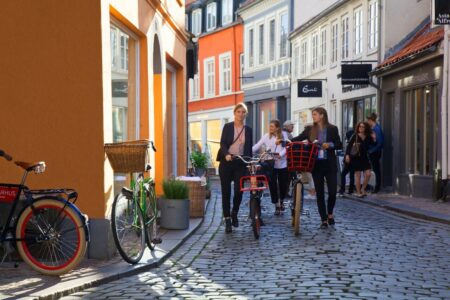
There are few things more quintessentially Swedish than sitting down with a freshly baked cinnamon bun and a cup of coffee.
The kanelbulle, or Swedish cinnamon bun, is so firmly woven into everyday life in Sweden that, naturally, it has its own day. Every year on 4 October, Sweden celebrates Kanelbullens Dag, Cinnamon Bun Day.
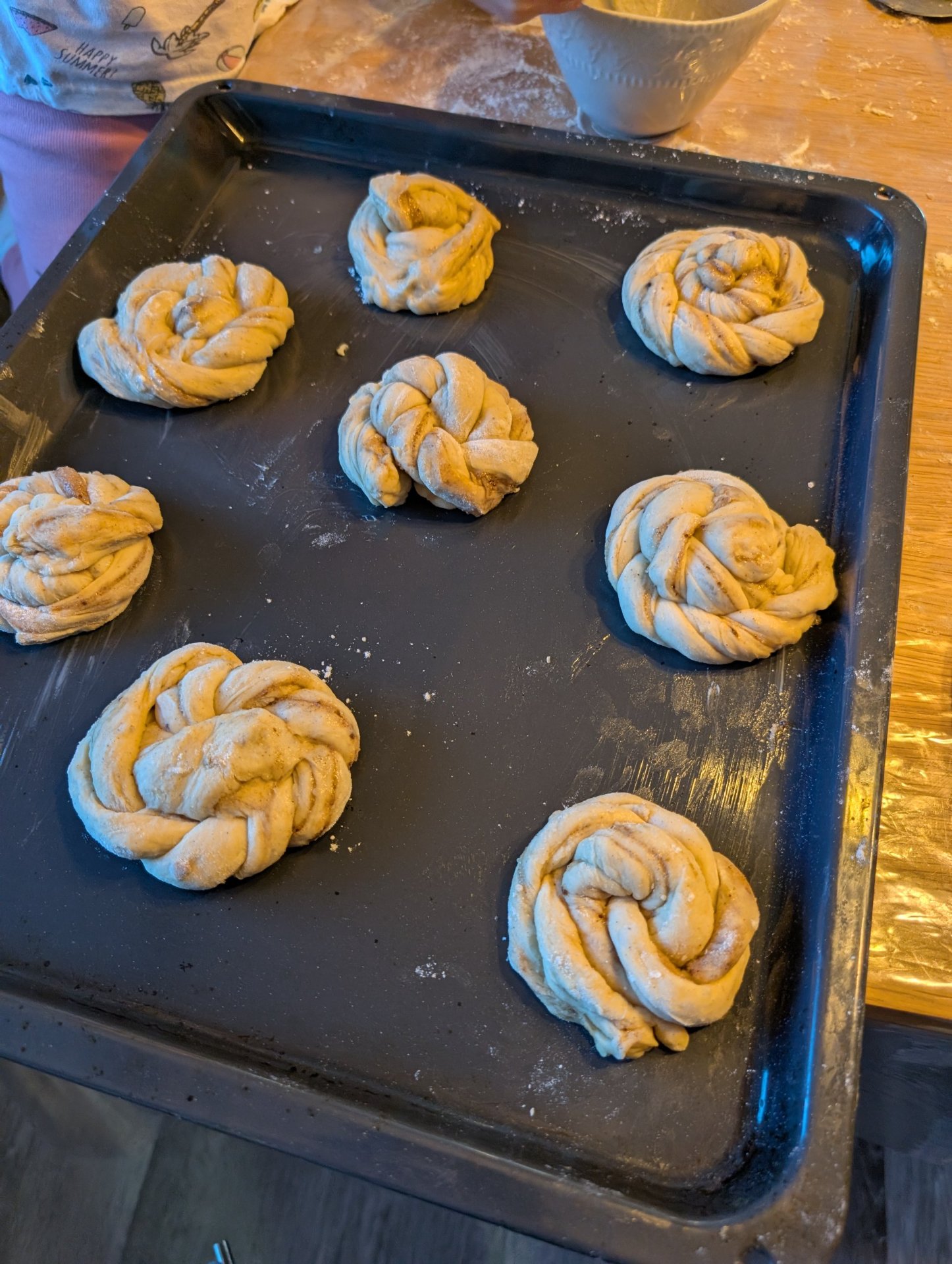
This year, our own Katie joined in by baking a rather impressive batch at home. And, if they have left you craving one too, we thought we would share a little of the story behind the tradition and a recipe so you can create your own taste of Sweden at home.
Why does Sweden celebrate Cinnamon Bun Day?
Despite feeling like a long-established Swedish tradition, Kanelbullens Dag is relatively modern.
The day was created in 1999 by Hembakningsrådet, the Swedish Home Baking Council, as part of its 40th anniversary celebrations. Kaeth Gardestedt, who was working with the organisation at the time, wanted to choose a baked good that people strongly associated with Sweden, home baking and happy memories.
The cinnamon bun was the natural choice.
The idea wasn’t simply to sell more buns. The original sentiment behind the day was one of home, care and togetherness, encouraging people to bake and share something with friends, family and neighbours.
Today, 4 October is firmly established in the Swedish calendar, with homes, cafés, bakeries and workplaces across the country joining the celebration.
The Swedish love affair with the cinnamon bun
The Swedish cinnamon bun emerged after the First World War, although ingredients such as butter, sugar and spices were still expensive at the time. It was during the 1950s, when those ingredients became more widely available, that the kanelbulle really became part of Swedish home-baking culture.
Unlike some heavily iced cinnamon rolls found elsewhere, a traditional Swedish kanelbulle is relatively simple: a soft, buttery yeast dough, usually fragranced with cardamom, wrapped around a cinnamon and butter filling and finished with crunchy pearl sugar.
And then, of course, there is fika.
Fika is sometimes translated simply as a coffee break, but that doesn’t quite capture it. It is an opportunity to stop, sit down and spend time together – with coffee and something sweet often playing supporting roles. Cinnamon buns are perhaps the most iconic accompaniment of all.
It is one of those small pieces of Nordic culture that tells you quite a lot about life here: finding enjoyment in something simple, making time for other people and appreciating the everyday.
Bake your own Swedish cinnamon buns
Inspired by Katie’s homemade batch, here is a traditional-style recipe you can try at home.
Makes approximately 20–24 buns
For the dough
- 500ml whole milk
- 14g instant dried yeast
- 100g caster sugar
- 150g unsalted butter, softened
- 2 teaspoons ground cardamom
- 1 teaspoon salt
- Approximately 850–900g strong white bread flour or plain flour
For the cinnamon filling
- 150g unsalted butter, softened
- 120g caster sugar or soft brown sugar
- 2 tablespoons ground cinnamon
- A small pinch of salt
To finish
- 1 egg, beaten
- Pearl sugar, if available
Method
- Make the dough
Warm the milk until it is just lukewarm – it shouldn’t feel hot. Add the yeast and sugar, then stir to combine.
Add the softened butter, cardamom and salt before gradually incorporating the flour.
Knead for around 8–10 minutes in a stand mixer, or a little longer by hand, until the dough becomes smooth, soft and elastic. Try not to add too much additional flour; a slightly soft dough will give you lighter buns.
Cover and leave somewhere warm for approximately 60–90 minutes, or until doubled in size.
- Make the filling
Mix the softened butter, sugar, cinnamon and pinch of salt together until smooth.
- Shape the buns
Turn the risen dough onto a lightly floured work surface and roll it into a large rectangle.
Spread the cinnamon butter evenly across the surface.
For classic spirals, roll the dough tightly from one long edge and slice it into individual buns.
Alternatively, for the beautiful twisted buns often seen in Swedish bakeries, fold the dough in half over the filling, cut it into strips and twist each strip before winding it into a loose knot.
- Leave them to rise
Place the buns on baking trays lined with baking paper, leaving some room between each one.
Cover and leave to prove for another 30–45 minutes, until noticeably puffed.
- Bake
Heat your oven to 220°C / 200°C fan.
Brush each bun lightly with beaten egg and scatter over pearl sugar.
Bake for approximately 8–12 minutes, depending on their size, until beautifully golden.
Allow them to cool slightly – although eating one while it is still warm is highly recommended.
Traditional Swedish recipes similarly combine a cardamom-enriched dough with butter, sugar and cinnamon, usually finished with pearl sugar.
Make time for fika
Of course, the final ingredient isn’t really an ingredient at all.
Put the kettle on. Make a good cup of coffee. Sit down while the buns are still warm and share them with someone.
That, perhaps, is the real spirit of Kanelbullens Dag.
And if travelling through Sweden, don’t overlook these seemingly simple traditions. Exploring Nordic culture isn’t only about dramatic landscapes and extraordinary hotels. Sometimes it is found around a café table, in the smell of cardamom and cinnamon coming from a local bakery, or in the ritual of stopping for fika with the people around you.
At All Nordics, it is these details, the traditions, places and people our team knows personally, that help us bring a little more of the destination into every journey we create.